Start with a clear brief
Connect the audience, product information and purpose of the piece. Keep approved claims and source material available to the people making it.
 Brendon HedrickDigital media & production workflows
A personal perspective · Brendon Hedrick
First published
Revised to clarify my focus on knowledge continuity, accessibility and practical improvements to work. The computing history and ICT account remain part of this essay.
Further clarification : my support for AI’s potential, my perspective on Jensen Huang and what computer graphics taught me about judging the result.
Professional focus refined around digital media production and workflows. The computing history and original ICT account are unchanged.
Technology should expand what people can do with their lives.
My practical contribution is in digital media: making technical subjects understandable, creating useful work and helping creative teams improve how they produce it.
01 / The longer view
I’ve been studying silicon architecture since I was ten years old. It has been a personal passion ever since.
That long view shapes how I see AI. I see a natural progression of technology: generations of people working to make machines calculate, follow instructions, connect information, and take on more complicated tasks.
The ambition predates the vacuum tube. In the 1830s, Charles Babbage designed a programmable mechanical computer. In 1843, Ada Lovelace, a mathematician and Lord Byron’s daughter, recognized that such a machine could operate on things represented by numbers, including music. The idea of computation reaching beyond arithmetic was already there, decades before Fleming’s electronic valve in 1904.
That was an early vision of general computation, not a blueprint for today’s AI. But the direction is recognizable: extend what people can accomplish by giving more of the process to a machine.
Historical context: Babbage’s engines, Lovelace’s 1843 notes, and Fleming’s 1904 valve.
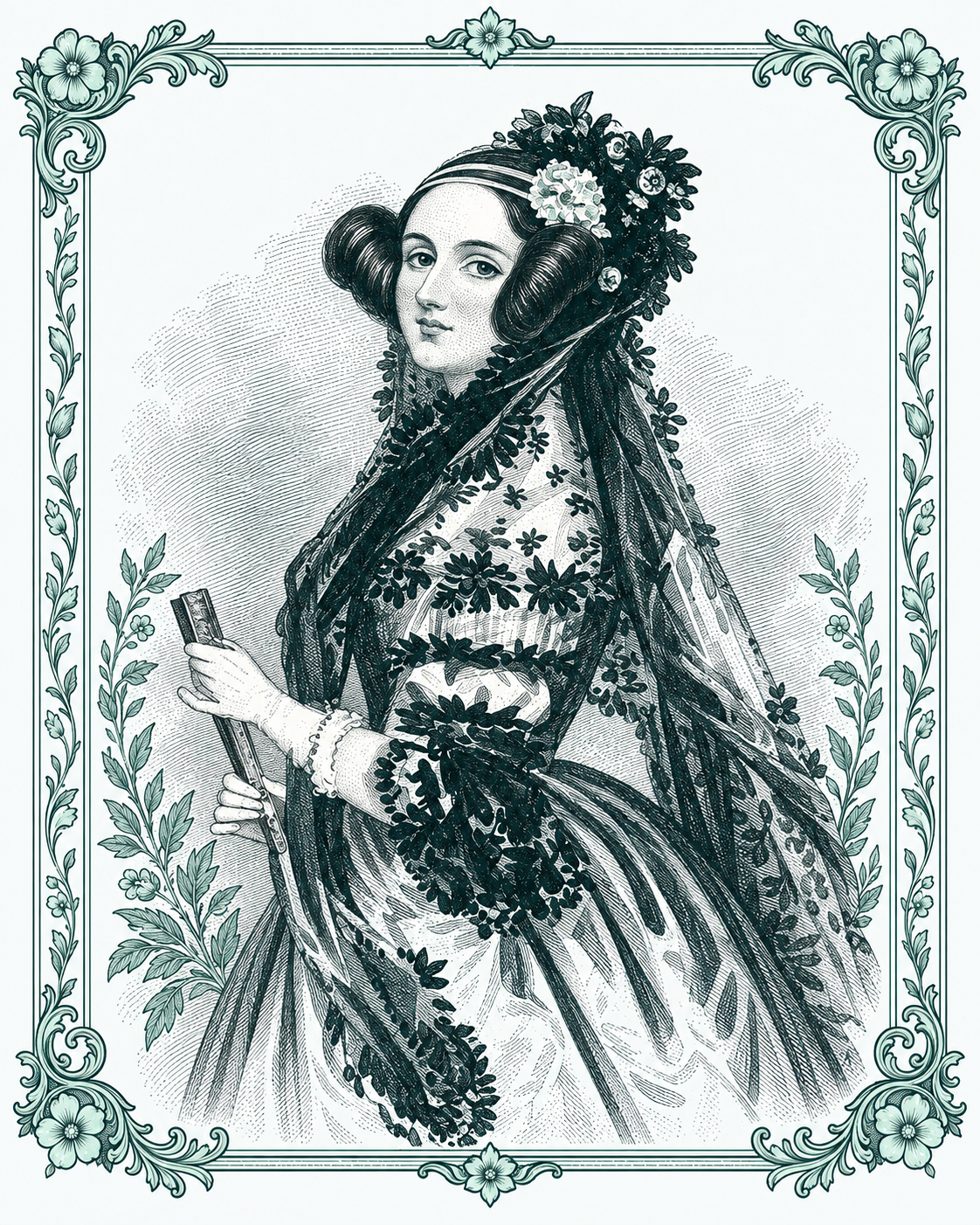
Imagination meets computation
“The Analytical Engine weaves algebraic patterns just as the Jacquard loom weaves flowers and leaves.”
Selected milestones in a shared history. Hardware, networks, and AI research developed alongside one another.
Movable markers let people represent quantities and carry out arithmetic. The operator still does the thinking, but a tool helps organize the work outside the mind.
Computer History Museum: the abacusBabbage designs a machine to calculate and print mathematical tables automatically. It is a specialized calculator, built around a method that can be carried out mechanically.
Computer History Museum: Babbage’s enginesBabbage’s more ambitious design separates memory from processing and uses instructions. Lovelace sees possibilities beyond arithmetic, including music. Neither needs a transistor to imagine a broader role for computation.
Computer History Museum: Ada LovelaceENIAC is publicly demonstrated at the University of Pennsylvania. Thousands of vacuum tubes carry out calculations electronically, showing what happens when computing moves beyond the speed of mechanical parts.
University of Pennsylvania: ENIACAt Bell Labs, John Bardeen and Walter Brattain demonstrate a working transistor. Semiconductor devices open a path beyond vacuum tubes and toward the compact electronics that later make personal computing possible.
Computer History Museum: the transistorThe Dartmouth summer research project brings scientists together around artificial intelligence. Learning and other aspects of intelligence become explicit goals of computing research, long before smartphones or the modern web.
Dartmouth: the 1956 research projectJack Kilby demonstrates a working integrated circuit in 1958. Robert Noyce’s 1959 design provides a practical approach to connecting components on silicon. This becomes a foundation for increasingly complex electronic systems.
IBM introduces a family of compatible mainframes. Organizations can grow their computing capacity while retaining software, making computers a more durable part of business operations.
IBM: the System/360Steve Wozniak’s Apple II debuts in 1977. Color graphics, a built-in keyboard, and BASIC put computing within reach of more people. With the arrival of the VisiCalc spreadsheet in 1979, it also becomes a powerful tool for business work.
Computer History Museum: the Apple IIWith roots in the 1969 ARPANET, the internet grows around shared networking standards, including the 1983 transition to TCP/IP. Tim Berners-Lee invents the web in 1989; CERN releases its web software into the public domain in 1993.
Salesforce, founded in 1999, helps bring business software to the web. In 2006, Amazon S3 and EC2 make storage and processing power available on demand. Teams can use hosted software and rent infrastructure, making it easier to launch and expand online services. This becomes part of the foundation for delivering modern AI at scale.
The iPhone combines a phone, a touch interface, and internet tools in a handheld device. It is a milestone in a broader smartphone story: email, maps, media, and computing become things people carry with them.
Apple: the original iPhone announcementThe landmark paper Attention Is All You Need introduces the transformer architecture, using attention mechanisms to process sequences more efficiently. It becomes a foundation for many of the large language models behind today’s generative AI.
Google Research: the 2017 transformer paperChatGPT’s public launch on November 30, 2022 gives people a conversational way to work with a generative language model. In the years that follow, tools for writing, coding, and image creation bring these capabilities into everyday workflows. The research breakthrough and this wider public adoption are distinct milestones.
George Lucas on AI
“There’s nothing you can do about it. That’s progress, it’s the future.”
— George Lucas
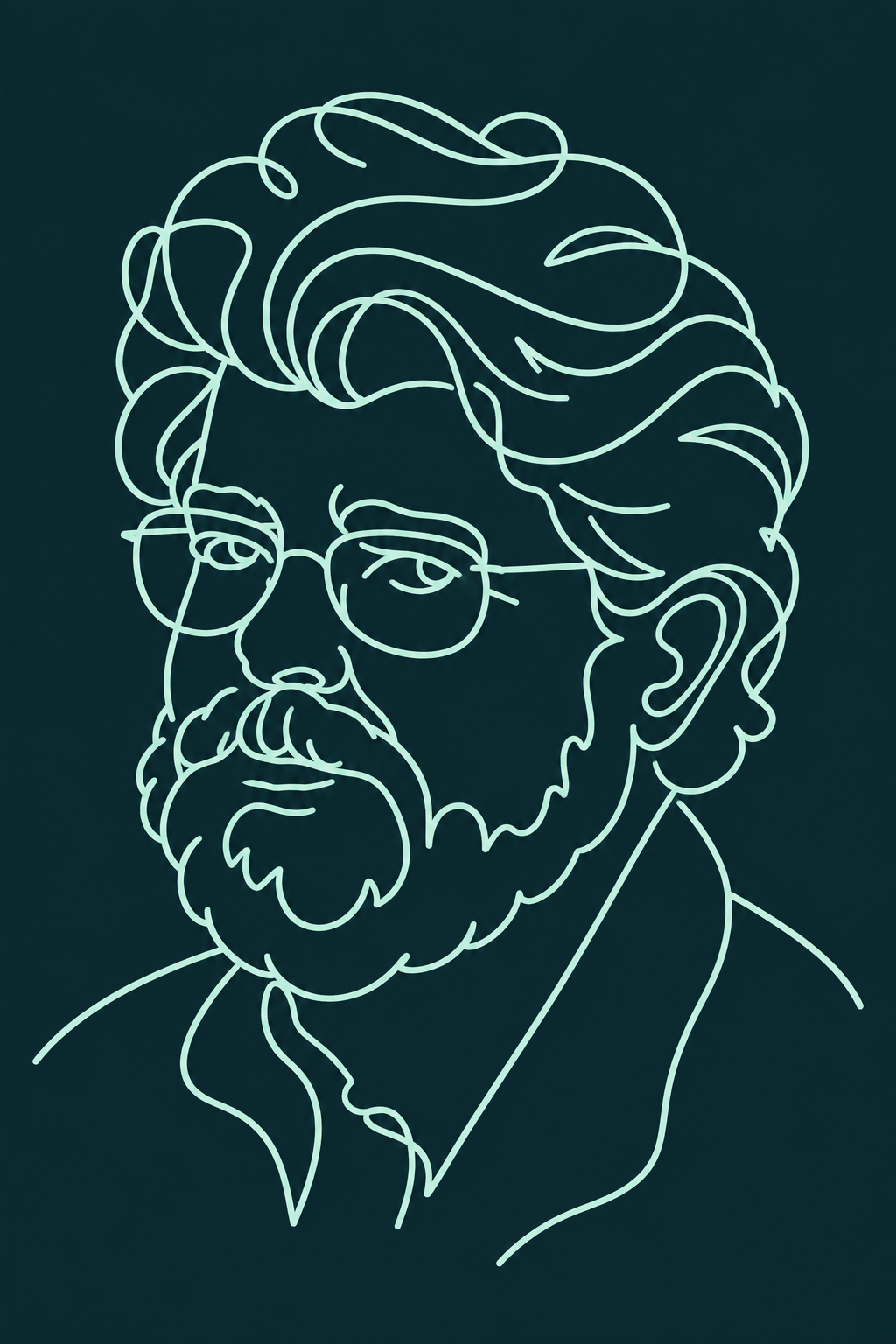
Speaking about AI in filmmaking, Lucas compared resistance to new technology with preferring a horse and buggy after the arrival of cars.
Read the interview A Rabbit’s Foot · July 2026I don’t see AI as a foreign idea suddenly pushed onto the story of human progress. I see generations of researchers, engineers, businesses, and users building the conditions that made it possible. The current pace can feel abrupt. The ambition behind it is old.
Each step gave us another way to move effort into a tool: calculation, recordkeeping, communication, navigation, and now parts of writing, design, and software development. Following silicon architecture has made that accumulation of capability especially compelling to me.
That history does not make every outcome inevitable. We still decide how these systems are used and who benefits. My belief is that we should use the capability we have built to reduce exhausting work and expand what people can do with their lives.
Building ICT was where that long view became something I could put to work.
How it changed my own work02 / What made it real
Then I started teaching the computer to do it.
At AddOn Networks, I spent my days repeating the same Photoshop and spreadsheet steps to keep up with new product images. Open the file. Prepare the data. Apply the label. Export. Repeat.
The work was draining. I started calling it “robot work,” and that phrase changed the question for me: if the process was this repetitive, why was a person doing every step?
I had no formal coding background. With ChatGPT’s help, I started with one small piece: generating the CSV that fed the Photoshop process. Seeing that first piece run automatically changed my sense of what I could build.
Over roughly fourteen months, I designed and developed the Image Creation Tool. I supplied the workflow knowledge, architecture, testing, and direction; ChatGPT generated and revised code. The graphics team’s photography, Photoshop actions, and review remained essential. We connected catalog data, image production, organized exports, and publishing into a working system.
More recently, I used my old development conversations and surviving records to build an interactive reconstruction for my website. AI helped me recover a way to show the work, even without the original company environment.
I had experienced the work as a person, then rebuilt it as a system. That changed how I see jobs.
Explore the ICT case study & reconstruction03 / Where better tools can help
Video, 3D, product imagery and technical content each depend on judgment. The surrounding production work can make that judgment easier to apply.
Connect the audience, product information and purpose of the piece. Keep approved claims and source material available to the people making it.
Preserve useful examples, production settings and the reasoning behind important choices. Help another contributor understand what a good result requires.
Review repeated data preparation, asset handling and export tasks. Use templates, scripts or appropriate AI assistance where the result can be checked.
Use clear instructions, understandable interfaces and more than one way to learn. Test the production process with the people who will rely on it.
Clarify which files are current, who reviews them and what each delivery needs. Make feedback and corrections easier to follow.
Agree on what improvement means for the media. Compare quality, production time and rework; record limitations alongside the gains.
The purpose is better work and a more usable production process. A new tool earns its place through the results it produces.
Progress needs a plan for people.
04 / What I am building toward
My EVGA essays brought me back to the importance of experienced people: what they notice, the decisions they make and the standards they uphold. My own work has carried that lesson through product demonstrations, video, 3D, technical writing and production workflows.
That is the scope of my consulting today. I help product-marketing, communications and creative teams produce clearer, more consistent digital media and improve the work behind it. My experience at EVGA, ViewSonic, Halo / AddOn Networks and other production teams is the foundation.
The starting point is a fixed-fee Digital Media Workflow Review: one recurring deliverable or process, examined from brief to delivery. The result is a set of priorities and a defined proposal for a separately scoped pilot.
AI can help develop tools or assist with parts of the production process. Sometimes the right improvement is a template, a script or a better use of an existing spreadsheet. The quality of the media, the experience of the team and the evidence of improvement determine the choice.
Production experience tells me what to inspect. Better tools give me more ways to improve it.
Read Knowledge worth keeping05 / What makes it worthwhile
AI uses hardware, energy, cooling and human expertise. It can produce convincing mistakes. A useful system needs clear goals, reliable inputs, testing and someone accountable for the result.
My experience with ICT involved thousands of problems and repeated refinement. The value came from understanding the work well enough to build something that helped. That history is evidence of a particular project, not a promise of the same outcome in every business.
I am optimistic about AI and want NVIDIA and others building these tools to succeed in helping people. My EVGA essays record my experience of a particular period. From what I see publicly, I believe Jensen Huang has grown since then; that is my personal assessment. My expectations of useful technology and responsible work apply to my own services, too.
My work in computer graphics shapes how I judge AI. An unconvincing effect can pull me out of a film; a carefully integrated effect can serve the story so well that I scarcely notice the technique. Poor output deserves criticism. The tool deserves to be judged across its uses, against the quality of the result and the benefit to the person using it.
For me, that includes whether a tool helps someone access knowledge, communicate or do work that was previously difficult to reach. Experience, care, testing and accountability are how I want to make that promise useful.
I want people to have more room to create, discover, care for one another and choose how to spend their lives. Practical work, evaluated honestly, is how I can contribute to that future.
More room to learn, create and participate.
That is the future I want to help build.
I know where my heart is
--Brendon